


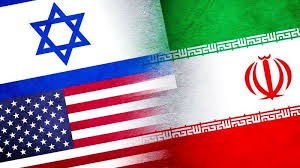
Iran and the United States have agreed to a 14-day ceasefire, brokered by Pakistan, just hours before a deadline set by former U.S. President Donald Trump.
The agreement comes amid escalating tensions, with Trump previously warning that all Iranian infrastructure and power facilities would be targeted if no deal was reached. Both Tehran and Washington have since welcomed the ceasefire, each claiming it as a form of victory.
Israel also announced its support for the ceasefire, albeit several hours after the initial announcement.
Talks to Begin in Islamabad
According to reports, formal negotiations between the two sides are expected to begin soon in Islamabad, Pakistan.
As part of the agreement, Iran confirmed that the Strait of Hormuz will be partially reopened for a two-week period under controlled conditions.
Iranian Foreign Minister Abbas Araghchi stated that safe maritime passage would be ensured in coordination with Iranian armed forces and under specific technical limitations.
Details of Iran’s 10-Point Proposal
Iran’s Fars News Agency, citing an informed source, published details of a 10-point proposal that reportedly formed the basis of the ceasefire agreement. Key elements include:
- A complete halt to all “aggression” against Iran and its allied groups
- Withdrawal of U.S. combat forces from the region and a ban on attacks from military bases
- Limited daily passage of vessels through the Strait of Hormuz under Iranian supervision
- Removal of all primary, secondary, and UN sanctions
- Compensation for damages to Iran through the creation of a financial fund
- Iran’s commitment not to develop nuclear weapons
- U.S. recognition of Iran’s right to uranium enrichment, with negotiations on enrichment levels
- Willingness to engage in regional peace agreements
- Extension of “non-aggression” principles to other actors targeting allied groups
- Termination of UN Security Council and IAEA resolutions against Iran
Trump: “A Great Day for Global Peace”
Donald Trump described the agreement as “a great day for world peace” in a post on Truth Social, stating:
“Iran wants this to happen. It’s enough for them. This could be the beginning of a golden era for the Middle East.”
He also confirmed that planned military strikes against Iran had been suspended, conditional on the full, immediate, and safe reopening of the Strait of Hormuz.
Trump emphasized that the ceasefire is “mutual” and intended to create space for a broader and more permanent peace agreement.
Immediate Impact on Global Markets
The announcement of the ceasefire had an immediate effect on global markets, particularly oil prices:
- Brent crude fell by approximately 13.6% to $94.50 per barrel
- U.S. crude dropped around 14.3% to $96.80 per barrel
Analysts say the sharp decline reflects market surprise at the agreement, although a return to pre-conflict price levels is considered unlikely.
Asian stock markets also reacted positively, with Japan’s Nikkei index rising about 4% and Australia’s ASX 200 gaining nearly 3%.
Iran’s Official Position
Iran’s Supreme National Security Council confirmed its approval of the two-week ceasefire, stating:
“If attacks against the Islamic Republic of Iran cease, our armed forces will also halt their defensive operations.”
The statement also expressed appreciation for Pakistan’s role in mediating the agreement.
Conclusion
The two-week ceasefire between Iran and the United States comes at a critical moment, potentially preventing a wider military confrontation. It is widely seen as an opportunity to initiate meaningful negotiations and reduce regional tensions.
However, analysts caution that the durability of this agreement will depend heavily on the outcome of upcoming talks.