

Residents of Balkhab, during meetings with the Taliban governor of Sar-e Pol, raised a series of demands ranging from the continued paving of the Sar-e Pol–Balkhab road and the construction of a standard hospital to improved telecommunications, winter fuel supplies and the implementation of development projects previously promised by the Taliban-controlled National Development Corporation. Their demands have once again brought into focus a longstanding question: what share do the people of Balkhab receive from the district’s coal wealth?
The issue in Balkhab is no longer simply how much coal is extracted from the district’s mines and transported elsewhere. The more important question is: what is left for the people of Balkhab in return for the extraction of this wealth?
In the final days of September 2026, Qari Bakhtiar Moaz, the Taliban governor of Sar-e Pol, made a two-day visit to Balkhab, where he met local officials, Shia religious scholars, community elders, young people and other residents of the district.
During the visit, residents raised a range of basic needs, including the continued paving of the Sar-e Pol–Balkhab road via the Qom-Kotal route, implementation of projects previously promised by the National Development Corporation (NDC), construction of a standard hospital, improvement of telecommunications networks and access to fuel during the winter.
From “Your Wealth” to Demands for Services
On 28 August 2026, Balkhab.com published an article titled “From Balkhab’s ‘Coal War’ to Badakhshan’s ‘Gold War’”, examining coal extraction, the situation of workers, mining revenues and promises made by the National Development Corporation.
One of the central issues raised in that article was an earlier statement by Abdul Rahman Atash, chief executive of the NDC, who described the mineral resources to the people of Balkhab as “your wealth” and said services should be provided to local people before that wealth was taken out of the area.
The question raised then remains:
If coal is the “people’s wealth”, where is the people of Balkhab’s share of that wealth?
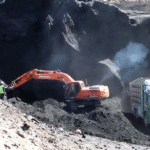
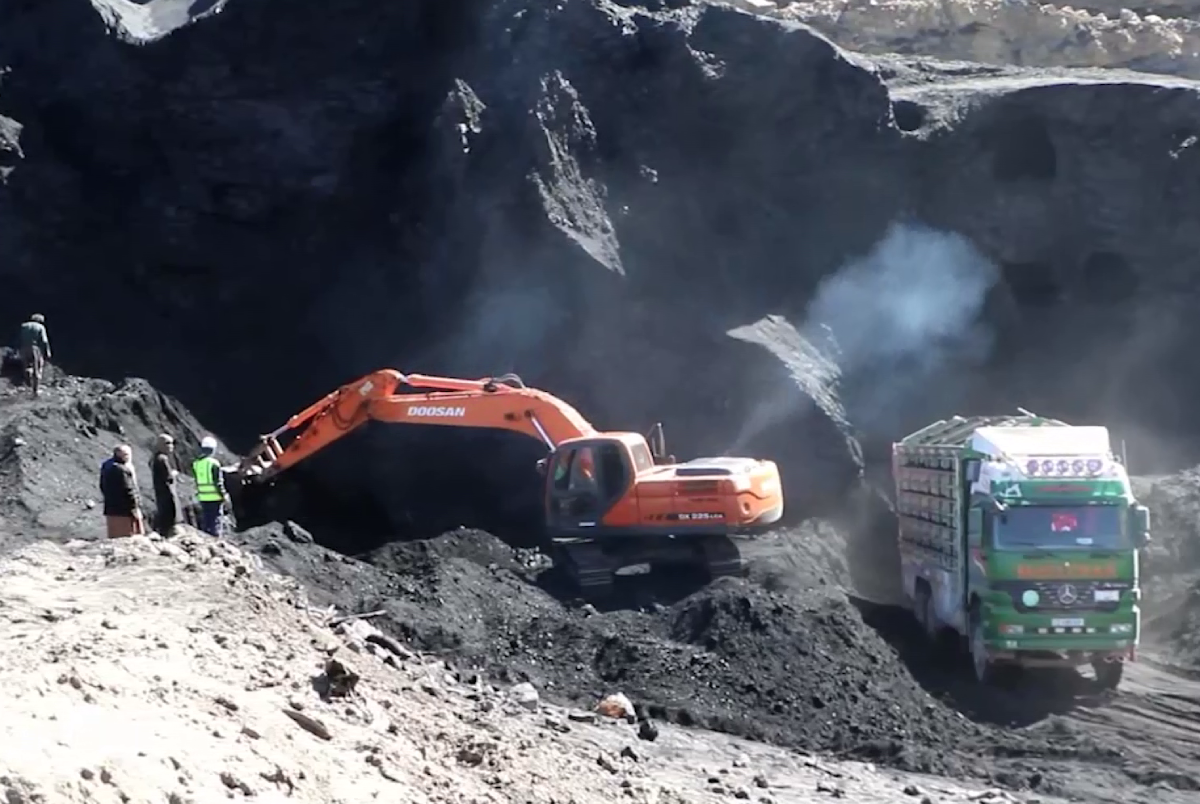
In 2025, the NDC said around 100 extraction sites had been established in Balkhab’s coal mines, more than 2,000 people were directly employed in the sector and annual coal production was close to 500,000 tonnes. The corporation also said more than 200 kilometres of connecting roads had been constructed between mining areas.
These are figures reported by the NDC itself.
The corporation also said coal needed by local residents would be supplied at an affordable price and that social services in the area would be expanded.
Now that residents are again raising concerns about roads, healthcare, telecommunications and winter fuel, a natural question follows:
How much of what was promised alongside the expansion of coal extraction can be seen in the everyday lives of the people of Balkhab?
Roads for Coal, or Roads for People?
One of the most significant issues raised during the Taliban governor of Sar-e Pol’s visit was the condition of Balkhab’s roads.
Mullah Abdul Qadir Frotan, the Taliban district governor in Balkhab, also spoke during the meeting about the difficulties caused by poor road conditions. He acknowledged that roads in Balkhab are in poor condition and said that residents are forced to use them despite the damaged and difficult routes. According to him, conditions on some roads are so poor that they create serious difficulties for people travelling in the area.
At the same time, the NDC says it has built more than 200 kilometres of connecting roads between Balkhab’s mining areas. According to the corporation, these roads were constructed to facilitate mining operations.
That distinction raises a fundamental question:
Roads for transporting coal, or roads for the people?
Access roads to mines may be necessary for extracting and transporting coal, but they do not necessarily provide the same function as a reliable public road network for the district’s population.
Residents need roads that connect them throughout the year to markets, hospitals, schools, the provincial capital and other essential services.
A Hospital: A Demand That Keeps Returning
Another major demand raised by residents was the construction of a standard hospital in Balkhab.
For a mountainous district such as Balkhab, where villages can be far apart, roads are difficult and winters are severe, access to adequate healthcare is not simply another development project. It is directly connected to people’s health and daily lives.
If the expansion of mining activity is intended to be accompanied by social development, the question is:
When will a standard hospital for Balkhab move from being a demand to becoming an actual project?
Coal Beneath Their Feet, Yet Winter Fuel Remains a Demand
One Balkhab resident also raised the issue of access to coal for household heating during the winter.
That demand is particularly notable in a district that is itself one of Afghanistan’s significant coal-producing areas.
When professional extraction of Balkhab’s coal mines was formally launched, the NDC said coal required by local residents would be provided at an affordable price.
This therefore raises another question:
How can people live alongside substantial coal reserves while access to winter fuel remains one of their demands?
The issue is not an argument for uncontrolled extraction by individuals. Rather, it concerns whether there is a clear and fair mechanism for meeting the legitimate fuel needs of local communities.
Telecommunications: A Basic Need in a Mining District
Improved telecommunications networks were also among the demands raised by residents.
Telephone and internet access are no longer luxury services. Communications are part of the basic infrastructure needed for commerce, education, healthcare, access to information, emergency calls and connecting villages with the district centre and the outside world.
In a district where natural resources are being extracted on a substantial scale, continuing deficiencies in basic telecommunications also raise the question of how far natural-resource development has been accompanied by investment in public infrastructure.
Taliban Governor of Sar-e Pol Promises Follow-Up
The Taliban governor of Sar-e Pol, responding to the demands raised during the meetings, spoke of following up on several issues, including development projects and the proposed hospital, with the relevant authorities.
He also emphasised security and direct communication between Taliban officials and the public, saying that, if circumstances allowed, he would seek to visit different districts and even individual villages to hear people’s concerns directly.
Security is fundamentally important to residents. But security can also provide the conditions for development, healthcare, education, employment and improvements in quality of life.
If people can travel day and night, the next questions are what kind of roads they travel on, where they go when they need medical treatment and what basic services are available to them.
Tarkhoj Revenue: Could the Same Principle Apply to Mining?
During his visit, the Taliban governor of Sar-e Pol also spoke about Tarkhoj market, saying that if ownership of the market were transferred to the municipality, its revenues could be reinvested in developing the same market.
That raises a broader question about Balkhab’s natural resources:
If revenue generated in Tarkhoj can be reinvested in developing the same area, could a clearly defined and transparent share of revenue from Balkhab’s natural resources also be allocated to the development of Balkhab itself?
This does not mean that all mining revenue should be spent exclusively in Balkhab. Afghanistan’s natural resources are part of the country’s wider public wealth.
But communities living where extraction takes place, and experiencing its direct effects, can ask what visible share of the resulting development benefits returns to their area.
A Month of Developments Around Balkhab’s Coal
Over the course of roughly one month, the issue of Balkhab’s coal and the local population’s share of its resources emerged in several separate developments.
On 28 August 2026, Balkhab.com published “From Balkhab’s ‘Coal War’ to Badakhshan’s ‘Gold War’”, raising questions about coal extraction, revenues, development promises and the share received by the people of Balkhab.
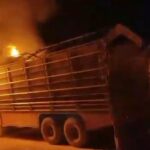
Two days later, on 30 August 2026, the Afghanistan Republic Front said its forces had set fire to a number of coal-carrying trucks at Rah Gardu Pass on the route between Balkhab and Dara-e-Suf.
The group linked the action to what it described as the Taliban’s “looting” of Afghanistan’s natural resources. A local source cited by Afghanistan International also confirmed that coal-carrying trucks had been set on fire on the route.
Taliban police in Sar-e Pol subsequently confirmed that two coal trucks had been burned but gave a different account of the incident, attributing it to what they described as “personal enmities”. The precise circumstances and motive were therefore disputed.
About a month later, in the final days of September, the Taliban governor of Sar-e Pol made his two-day visit to Balkhab. During meetings with local residents, demands concerning roads, healthcare, telecommunications, winter fuel and development projects were raised directly.
These developments are different in nature, and their proximity in time does not in itself establish a causal relationship between them.
Taken together, however, they show that within the space of roughly a month, the questions of coal, development and the local population’s share of Balkhab’s resources emerged in media coverage, security developments and direct discussions between residents and Taliban authorities.
The Most Important Development: Residents Speak for Themselves
Among all these developments, perhaps the most significant issue is neither a media article, nor the words of an official, nor the actions of an armed group opposed to the Taliban.
What matters is that the people of Balkhab themselves are raising their demands.
Residents can ask how much revenue Balkhab’s coal generates and where that money is spent; how much of the benefit returns to Balkhab’s development; when the hospital they need will be built; when the Sar-e Pol–Balkhab road will be brought to an adequate standard; how telecommunications problems will be addressed; and what arrangements exist to provide winter fuel.
Raising these questions does not necessarily mean opposing the extraction and use of the country’s natural resources. Transparency over revenues, expenditure and local projects can make it easier to assess how extraction affects the development of the area.
Coal is a non-renewable resource. Roads, hospitals, schools and other public infrastructure, however, can continue to serve communities long after extraction has ended.
But after repeated promises, words alone are no longer the only measure.
The measure will be what the people of Balkhab see “in practice.”