


8 March 2026
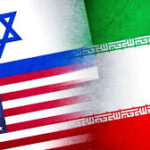
More than a week after the start of military confrontation between Iran, Israel, and the United States, reports indicate that reciprocal attacks and rising tensions continue across the Middle East. The conflict, which began in late February, has now become one of the most significant security crises in the region in recent years.
Beginning of the Conflict
The war began on February 28, 2026, with large-scale airstrikes carried out by Israel and the United States against targets inside Iran. According to initial reports, dozens of military and strategic infrastructure sites in several Iranian cities — including Tehran, Isfahan, Tabriz, Kermanshah, and Ahvaz — were targeted in the first wave of attacks.
Some sources say the strikes targeted military command centers, missile bases, and weapons storage facilities. In the first hours of the attacks, explosions were reported in several Iranian cities, while images circulating on social media showed fires at some industrial and military sites.
New Strikes on Iran’s Energy Infrastructure
In recent days, reports have suggested that additional strikes have targeted energy facilities and oil storage sites in Iran. Some sources reported fires at fuel storage facilities near Tehran and in other industrial areas.

Analysts say targeting energy infrastructure could increase economic pressure on Iran while also affecting global oil markets. The Middle East remains one of the world’s most important energy-producing regions, and instability in the area can have significant consequences for the global economy.
Iran’s Response and Missile Attacks
In response to the strikes, Iran announced that it had launched missile and drone operations against targets in Israel. Reports indicate that air raid sirens sounded in several Israeli cities, including Tel Aviv and Haifa.
At the same time, reports suggest that a new wave of Iranian missile attacks targeted central areas of Israel. Air raid sirens were also activated in several locations in central Israel.
According to some sources, Iran fired hundreds of missiles and drones toward Israel in retaliation for the earlier strikes. Parts of Tel Aviv, Haifa, Jerusalem, and southern Israel were reportedly affected by these attacks.

After the Israeli military warned of a new wave of Iranian missile launches, several explosions were heard again in Tel Aviv. Minutes later, the Israeli military said additional missiles had been detected, and loud explosions were reported in several areas.
According to the Israeli military, the country’s missile defense systems intercepted a large number of incoming missiles, although some of them reportedly struck targets inside Israel.
Meanwhile, Iran’s Islamic Revolutionary Guard Corps (IRGC) announced that in a missile attack it had targeted the Israeli cities of Beersheba and Tel Aviv, as well as an air base in Jordan.
Attacks on U.S. Bases in the Region
As the conflict continues, reports have emerged of attacks on U.S. military bases in the Persian Gulf region. Some reports suggest that American bases in Bahrain, Qatar, Kuwait, and Iraq were targeted.
Reports also indicate that U.S. military facilities in several regional countries — including Bahrain, Qatar, Kuwait, Saudi Arabia, and the United Arab Emirates — were targeted by Iranian missile and drone strikes.

The American newspaper The New York Times reported that satellite images, videos, and statements from the U.S. military suggest that at least six bases or facilities connected to U.S. forces in West Asia were struck during the Iranian attacks.
Meanwhile, according to Al Jazeera English, around 40,000 to 50,000 U.S. troops were stationed — either permanently or temporarily — at at least 19 locations in more than 12 countries in the region as of January 25. The presence of large numbers of American forces in these countries has increased concerns about the security of these bases as the conflict intensifies.
Rising Concern in Arab Countries
As the conflict expands, concerns have also grown among Arab countries in the region. Reports suggest that missiles and drones were launched toward Saudi Arabia, the United Arab Emirates, Bahrain, Qatar, Kuwait, Jordan, and Iraq during the recent tensions.

It is reported that Bahrain, Qatar, Kuwait, and Iraq were among the countries where some of these attacks were directed.
Some of these countries say their air defense systems successfully intercepted several missiles and drones. At the same time, security measures have been increased around oil refineries, airports, and other critical infrastructure in these states.
Political Developments in Iran
Recent developments have also drawn attention to the political leadership situation in Iran. Some analysts believe that political changes after Ayatollah Ali Khamenei, Iran’s leader, could influence how the crisis is managed and how strategic decisions are made in Tehran.

However, Iranian officials have emphasized that the country’s governing institutions and decision-making structures continue to function and that Iran will resist external pressure.
Reactions from World Leaders
The United Nations has called on all parties involved to avoid further escalation and to pursue diplomatic solutions to prevent the crisis from expanding. UN officials warned that continued fighting could have serious humanitarian and economic consequences for the region and the world.

In Europe, leaders of European Union member states have held emergency meetings to discuss the developments in the Middle East and their potential impact on global security and economic stability. Some European leaders stressed the importance of reducing tensions and beginning negotiations to prevent further escalation.
Russia has also urged restraint from all sides, saying that further escalation could seriously threaten regional stability. Russian officials have emphasized the need for political and diplomatic solutions.
China also expressed concern about the intensifying conflict in the Middle East and called on all parties to avoid actions that could widen the war. Beijing stressed that stability in the region is important for global economic and international security.
Governments in other parts of the world have also called for restraint and have attempted to encourage diplomatic efforts to prevent the conflict from expanding.
Positions of Iran, the U.S., and Israel
As the conflict intensifies, leaders of Iran, the United States, and Israel have taken different positions regarding the continuation of the war.
In Iran, the interim leadership council said the country would not surrender to military or political pressure and would continue responding to attacks. Iranian officials also stated that Iran is prepared to defend its interests and security against what they described as “external threats.”

Meanwhile, U.S. President Donald Trump said that the United States would support its allies in the region and, if necessary, take further measures to protect American forces and bases.

Benjamin Netanyahu, Israel’s prime minister, said that the country is prepared to confront security threats and that military operations will continue until the stated objectives are achieved. He also stressed that Israel will defend its citizens against Iranian missile attacks.
Impact on the Global Economy
The continuing conflict has already had a noticeable impact on global energy markets. Oil prices have risen, and concerns about the security of energy routes through the Persian Gulf and the Strait of Hormuz have increased.

Economic experts warn that if the war continues, oil exports from the region could be disrupted — a development that could have significant consequences for the global economy.
The Future of the Crisis
Despite international calls for de-escalation, there are still no clear signs that the fighting will stop soon. Analysts say that if the reciprocal attacks continue, the conflict could spread to other countries in the region.
In such circumstances, many international observers stress the importance of diplomatic efforts to prevent further escalation.